
Physical: China, The Infinite Replicator
The world is changing..


Recap
Earlier this year I wrote about the collapse of traditional status signalling and how old symbols of prestige are dying. This is primarily due to the fact that these industries could not absorb the sheer volume of counterfeit goods emerging from China, which diluted the signal over time. AI will further exacerbate this process, as it enables the creation of carbon copy replicas of old signals with no reliable mechanism of authentication, whether in the physical world or online (maybe crypto can help?).
I outlined the different phases of this transition. We are currently in the symbolic burnout phase, where legacy status signals begin to collapse at scale. I believe we are still in this phase globally.
What I actually want to examine today are the drivers of this collapse, and the broader implications beyond the realm of counterfeiting luxury goods or AI mimicry.
This will be a 3 part series:
Physical: China, The Infinite Replicator
Digital: AI Eats Everyone
Synthesis: China and AI
Physical: China, The Infinite Replicator
China’s industrial revolution was unlike the West’s. Europe mechanized slowly through capital accumulation. The U.S. industrialized through domestic markets and innovation, yet China did something different. It compressed the entire industrial evolution of the West into 30 year.
The drivers:
an almost limitless supply of labour moving from rural to urban
state-directed economic incentives
deliberate theft of Western manufacturing IP
Once China established the machinery of replication and e-commerce exploded in the mid-2000s, the world experienced something new: the demonetization of physical goods.
Shenzhen’s replica ecosystem became a parallel industrial universe, driven by global demand to reproduce anything that could be sold.
At first, brands would try to outcompete via different strategies like regulatory actions, authentication and rapid product updates. But you can only battle free markets for so long, and when the material substrate of the signal can be copied for $49… the cultural meaning dissolves.
This dynamic hit a tipping point in 2024, during the post-Trump tariff era, when Chinese manufacturers took to TikTok and openly explained to Western consumers (especially women) that the same factories producing $5,000 handbags were making identical versions for $200.
Women are the true arbiters of status in consumer culture so this was a seismic cultural shift.
In hindsight, it is deeply ironic that many luxury brands originally outsourced their production to these Chinese factories in pursuit of higher profit margins, inadvertently seeding the infrastructure of their own demise.
As a side note this demise was obvious to those that were locked in, as a phenomena I like to call Semantic Decay began taking hold.
Semantic Decay - When a system senses its own demise, it often begins to accelerate the collapse by dismantling the very logic it was built upon. We saw this clearly in legacy luxury houses like Balenciaga, which pivoted from craftsmanship and credibility to absurdism in order to generate attention through shock and self-parody. The same dynamic appeared in memecoins: when financial fundamentals and intrinsic value no longer served as signals, the crypto market embraced pure nihilistic spectacle.
But it wasn’t just luxury goods that were targeted by China. Cloned medicines, electronics, imitation vehicle parts and cosmetics had a large impact on the global market. The drop shipping boom of the 2010’s was simply a multiyear arbitrage on Western ignorance.
Anyway, everything above was only the adolescent phase of China’s manufacturing rise.
We are now entering something entirely different.
China began as the world’s factory floor.
Now:
DJI dominates drones
BYD challenges Tesla
Shein dictates fast-fashion velocity
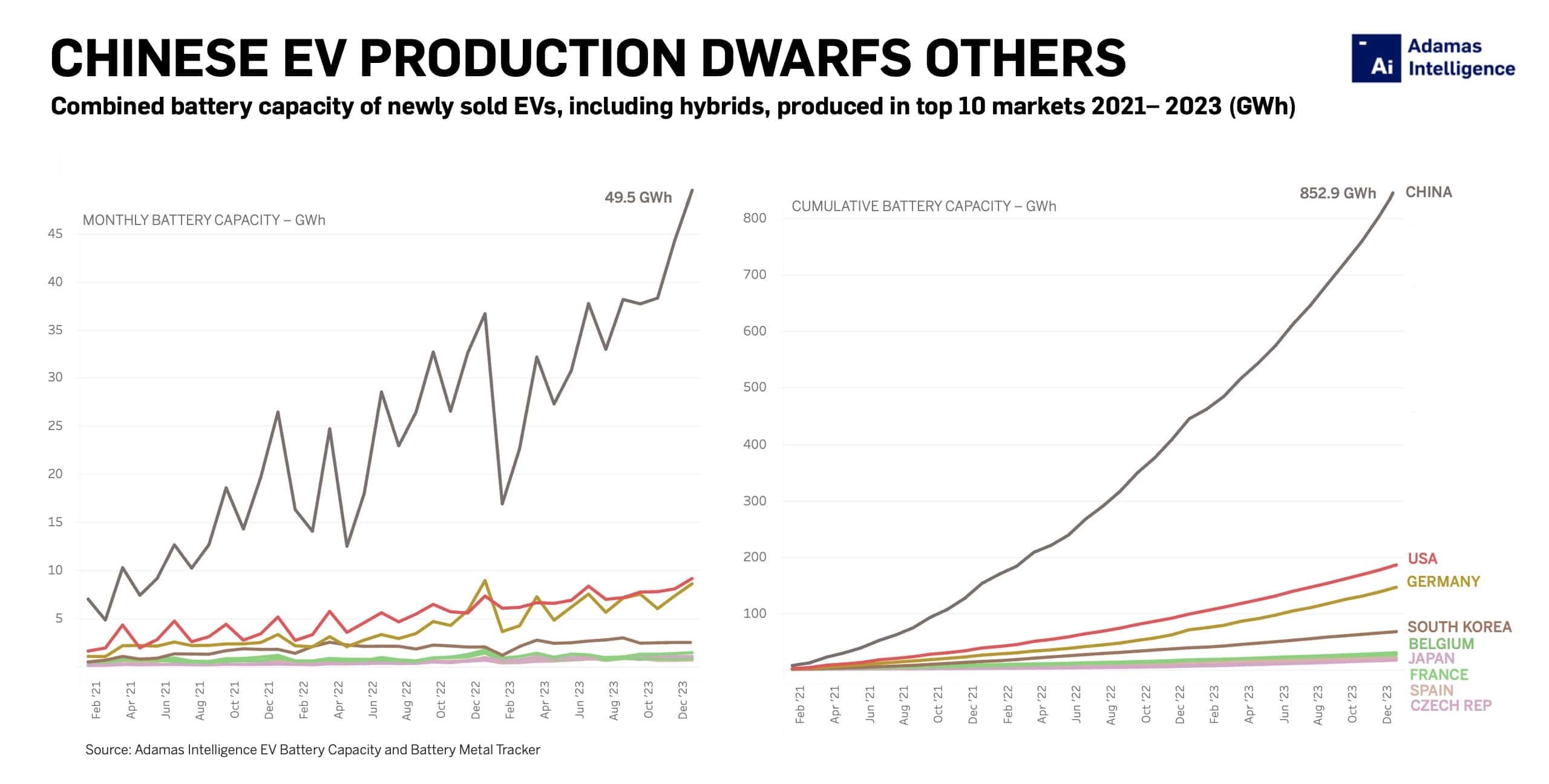
Rather then using cheap labour, in this second phase China coordinates aggressive state support, strategic control of the supply chain, and unmatched execution in mass production. They offer government subsidies, land, financing, and export backing, effectively turning every major company into a national champion. By controlling raw materials, component manufacturing, logistics, and the factory ecosystem itself, China controls the inputs that make production possible. The conflict between China and the US over rare earth minerals (China controls around 49% of the global supply and 90 % of the world’s rare-earth processing and refining capacity) is the latest iteration of the above.
Meanwhile, its factories are able to move from idea to mass-manufactured output faster than any Western firm. For context, some BYD industrial complexes are being built to become physically comparable in land area to the city of San Francisco. These are no longer traditional factories, but industrial cities.
If we examine this trajectory to its logical conclusion, then China eventually dominates every industry in the physical world.
Land > Capital > Material
Across history, power has shifted through distinct material stages. In the feudal era, power came from land. arable territory determined wealth and society revolved around agricultural output.
In the industrial age, power shifted to capital. The ones who controlled banks, and financial instruments eclipsed the old land-based aristocracies; Rockefeller and Rothschilds replaced dukes and lords.
Today, we are in a new paradigm entirely: power now lies in control of material. Command over critical inputs, supply chains and refining systems. The civilisation that controls the machinery of material creation determines the physical reality the rest of the world must live inside.
despite the lack of immediate buzz around your latest blog, I enjoyed it. highlights of how transitions in what is valued can be observed as we slide further into anoter crisis of meaning were well written. just free-subbed as a means to encourage your effort towards the blog